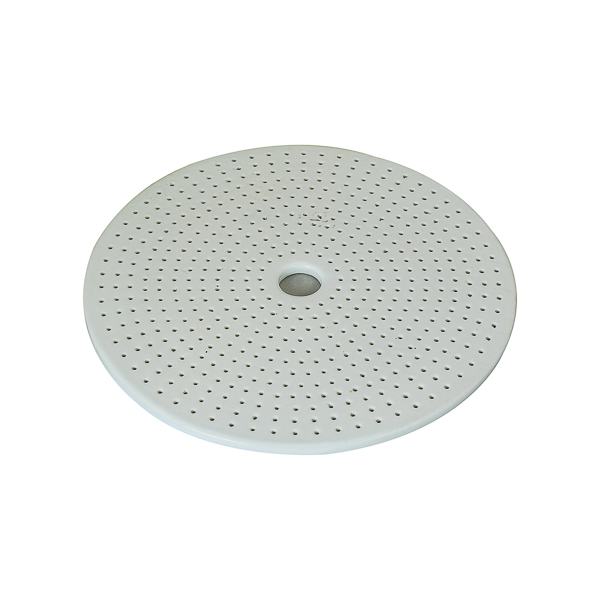
Desiccator plate, porcelain
Thermal Shock Resistance: Average coefficient of expansion from 20 C to 200 C is 3.56 x 10 , gradually increasing to 4.69 x
10 at 1000 C. Experience has indicated suitability of particular shapes for specific uses. It remains the responsibility of the
user to determine the suitability for his use. To prevent thermal stress cracks on porcelain ware, labbox strongly
recommends aheating/cooling rate not to exceed 200 C/hour. The thermal shock resistance of laboratory porcelain depends
on various factors such as the correct correlation of the coefficient of expansion of porcelain body and glaze, the elasticity of
glaze, etc.
The Glaze: No softening occurs up to 1000 C, and it is extremely white.
Resistance to Chemical Action: The resistance to acids and alkalies is excellent, except for hydrofluoric acid.
Prolonging labware life:
Follow gradual heating and cooling rates.
Use an oven or hot plate as an intermediate step when quicker heating/cooling rates are required.
Gradually increase flame intensity when using a gas burner.
Avoid contact of heated ware with a cold surface.
Carefully inspect your labware prior to each use
Don’t use any product that appears defective

Reviews
There are no reviews yet.