Description
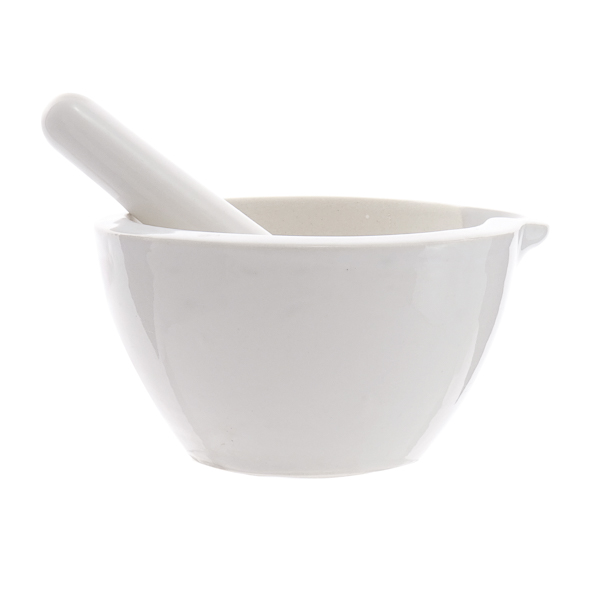
Made of upper grade porcelain. Unglazed inside but fine polished.
Price includes mortar and pestle.
You can find spare ‘Pestle for porcelain mortar’
MATERIAL
Porcelain Thermal shock resistance: The average elongation coefficient from 20º C to 200º C is 3.56 x 10⁻⁵ and gradually increases to 4.69 x 10⁻⁵ at 1000 ºC. Experience shows that special models are necessary for specific uses. It is the responsibility of the user to determine whether the model is suitable for the respective use. To prevent cracks caused by thermal pressure on the porcelain, We recommends not exceeding a heating/cooling speed of 200 ºC/h. The resistance to thermal shock of porcelain used in laboratories depends on several factors such as the correct correlation between the coefficient of elongation of the porcelain body and the glaze, the elasticity of the glaze, etc. The glaze: The softening only occurs at 1000 ºC and is extraordinarily white. Resistance to chemical reactions: The resistance to acids and alkalis is excellent, with the exception of hydrofluoric acid. Extending the lifetime of the material: Use gradual heating/cooling rates. Use an oven or hot plate as an intermediate step when rapid heating/cooling speeds are necessary. If you use a Bunsen burner, gradually increase the flame intensity. Avoid contact of heated material with cold surfaces. Carefully inspect laboratory materials before each use and do not use anything that is defective.
Made of upper grade porcelain. Unglazed inside but fine polished. Price includes mortar and pestle. You can find spare ‘Pestle for porcelain mortar’

Reviews
There are no reviews yet.